
MBA / PGDM

Careers in FinTech after MBA / PGDM: A Complete Guide
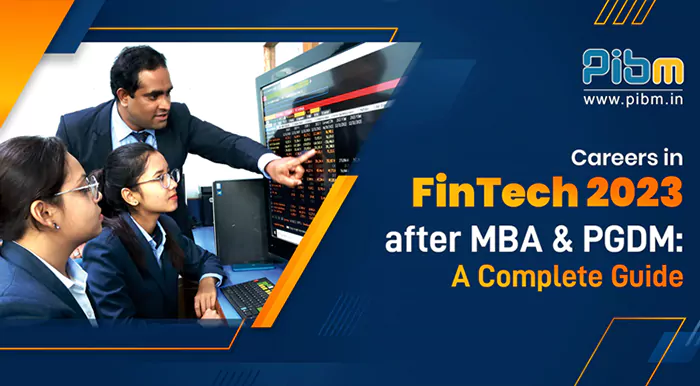
Table of Contents
What is the FinTech Sector?
The FinTech industry has expanded rapidly in recent years, creating a growing demand for professionals who understand both finance and technology. The term FinTech combines "financial" and "technology" and refers to the use of technology to develop smarter, faster, and more accessible financial services. The sector covers a wide range of applications, including digital banking, mobile payments, cryptocurrency, blockchain, and other technology-driven financial solutions. For students exploring Careers in FinTech 2025-26 after an MBA or PGDM, this blog offers valuable insights into emerging career opportunities, required skills, and the evolving scope of the industry.
How to Kick-start Your FinTech Career After MBA or PGDM?
Starting a career in FinTech requires a combination of skills, experience, and education. Here are some steps to follow to start your career in FinTech:
- Identify your Area of Interest: FinTech is a vast field, and it is essential to identify your area of interest. This will enable you to focus on building the necessary skills and experience in that area.
- Gain Relevant Skills: To work in FinTech, you must have relevant skills such as programming, data analytics, financial modelling, and digital marketing, among others. Consider taking courses or certifications to gain these skills. The top-ranked institutes offer an MBA in FinTech in Pune and across India.
- Get Work Experience: Experience is critical in FinTech, and you should seek opportunities to work in the industry. This could be through internships, volunteering, or working on personal FinTech projects.
- Build your network: Networking is essential in FinTech, and you should attend conferences and events to connect with professionals in the industry.
How Does a Degree in FinTech Make You Career-Ready?
Pursuing a degree in FinTech from the best MBA Colleges in Pune or India is an excellent way to gain the necessary skills and knowledge to launch a successful career in the industry. Here are some benefits of pursuing a degree in FinTech:
- Industry-relevant Curriculum: FinTech degrees are designed to provide students with industry-specific knowledge and skills. This ensures that graduates are job-ready and can hit the ground running.
- Hands-on Experience: Many FinTech degree programs offer practical learning opportunities such as internships, capstone projects, and simulations. This gives students hands-on experience, which is highly valued in the industry.
- Networking Opportunities: Pursuing a degree in FinTech provides students with ample opportunities to network with professionals in the industry. This leads to better internship opportunities and job offers.
Best Career Opportunities in FinTech
In this section, we will elaborate on the top seven career opportunities in FinTech and the skills required for each role.
Product Manager
A product manager in the FinTech industry is responsible for overseeing the development and implementation of new financial products and services. They must have a deep understanding of the market and consumer needs, as well as the technical skills to work with developers and designers to build products.
Financial Analyst
A financial analyst in the FinTech industry is responsible for analyzing financial data to provide insights into market trends and investment opportunities. They must have a strong understanding of financial markets and the ability to use data analysis tools.
Risk Manager
A risk manager in the FinTech industry is responsible for identifying and mitigating financial risks associated with the company's operations. They must have a deep understanding of financial regulations and risk management strategies.
Compliance Manager
A compliance manager in the FinTech industry is responsible for ensuring that the company complies with all relevant financial regulations. They must have a deep understanding of financial regulations and the ability to implement compliance policies and procedures.
Finance Operations Manager
A finance operations manager in the FinTech industry is responsible for overseeing the day-to-day operations of a financial company. They must have strong organizational and managerial skills, as well as a deep understanding of the financial industry and regulatory compliance.
Business Development Manager
A business development manager in FinTech is responsible for identifying new business opportunities and partnerships, as well as managing relationships with existing clients. They must have strong communication and negotiation skills, as well as a deep understanding of the financial industry.
Marketing Manager
A marketing manager in FinTech is responsible for developing and implementing marketing strategies to promote financial products and services. They must have strong communication and creative skills, as well as a deep understanding of the target audience.
Conclusion
In conclusion, the FinTech industry offers a wide range of career opportunities for professionals from different academic and professional backgrounds. Pursuing a PGDM or MBA in FinTech can help you build the industry-specific knowledge, technical capabilities, and business skills required to develop a successful career in this fast-evolving field.
If you are exploring a reputed FinTech MBA program in Pune, India, the Pune Institute of Business Management (PIBM) can be a strong option to consider. PIBM offers an MBA in FinTech affiliated with Savitribai Phule Pune University, with a curriculum covering areas such as strategy management, cyber laws, and financial management. An MBA in FinTech from PIBM can provide students with practical exposure and relevant skills to build a rewarding career in the growing FinTech sector.


Related Articles