
Education

From the Shop Floor to Supply Chains: The Journey into Operations
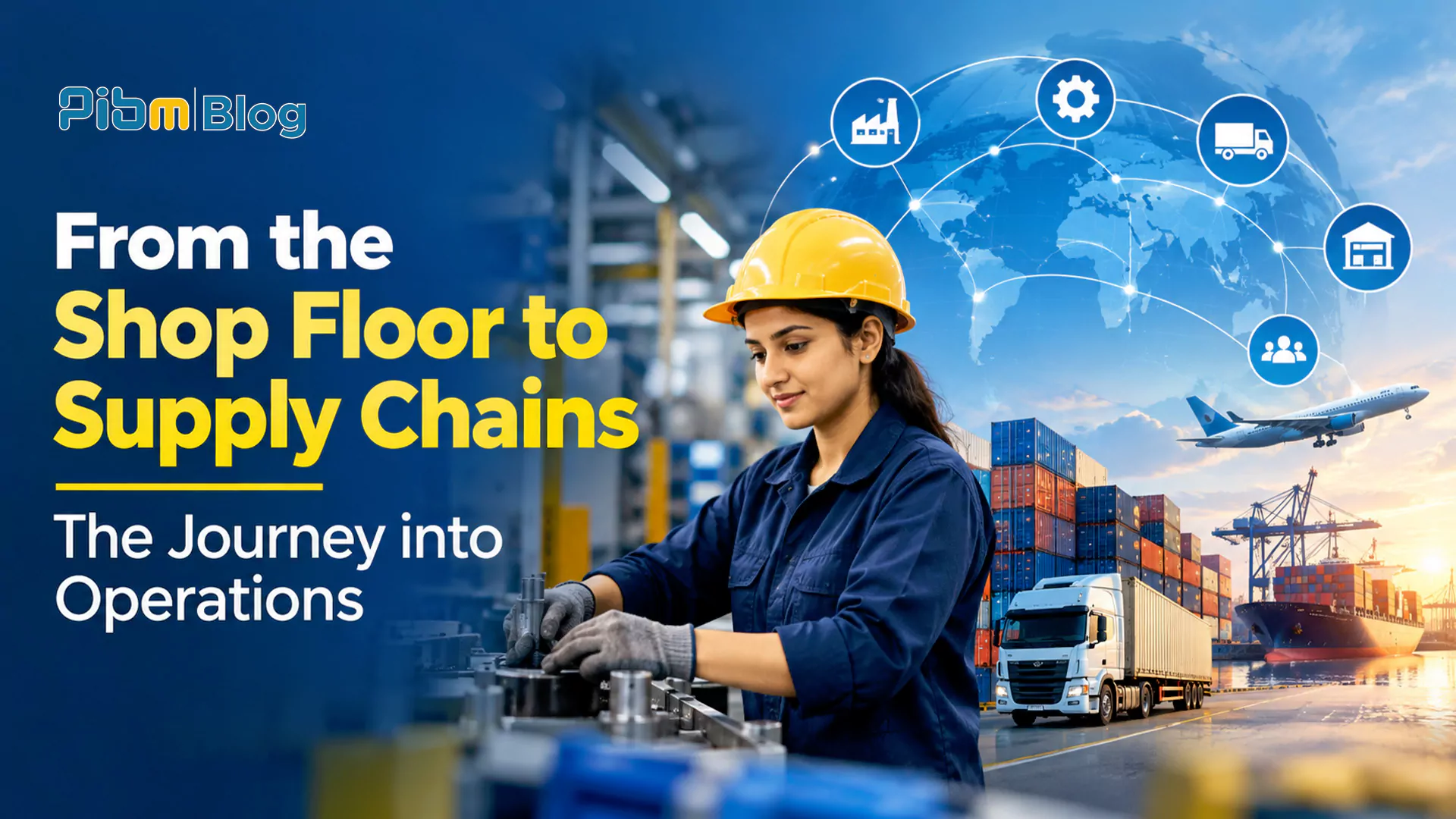
Table of Contents
From the Shop Floor to Supply Chains: My Journey into Operations
Hi, I'm Sneha. I'm currently pursuing my PGDM in Finance from the Pune Institute of Business Management (PIBM), and if you'd asked me two years ago whether I'd ever find myself fascinated by supply chains and inventory systems, I probably would have laughed. Finance was always the plan. But somewhere along the way, operations found me first.
Where It Started
Before business school, I spent close to two and a half years working as an Operations Manager at my family's retail business, Lady Beauty Corner. On paper, it sounds like a small, everyday role. In reality, it taught me more about how a business actually runs than any textbook could.
I was responsible for inventory management: knowing what to stock, when to reorder, and how to avoid the two costliest mistakes in retail, which are overstocking dead capital and understocking and losing customers. I implemented a hyperlocal delivery system, which meant thinking through last-mile logistics on a very human scale, including bikes, delivery windows, and customer expectations. I also worked on competitive pricing analysis, which taught me that operations and finance were never really separate disciplines. Every inventory decision was a cash flow decision. Every logistics choice had a cost attached to it.
Why Supply Chain and Logistics Fascinate Me Now
When I started my PGDM, I expected my journey to revolve mainly around finance, and that remains my primary area of interest. However, studying supply chain and operations management has given me a new perspective. Many of the concepts I encounter in class feel familiar because I had already experienced their practical side while working on a shop floor. What I lacked was the formal language and structured understanding to connect those experiences with business theory.
Ideas such as order-to-cash cycles, inventory-linked working capital, and demand forecasting no longer feel like textbook concepts. I have seen smaller versions of these challenges in the real world, and my PGDM is helping me understand how they operate at a much larger scale. Whether it is Amazon or Reliance Retail managing thousands of SKUs, companies balancing just-in-time inventory with the risk of supply disruptions, or seasonal demand during festivals such as Durga Puja in Kolkata influencing months of logistics planning, I now understand how everyday business decisions can become complex operational strategies when they are scaled across large organizations.
Connecting the Dots
- Operations and Finance Are Interconnected: Supply chain, operations, and logistics are not separate from finance; they directly influence financial performance and business decisions.
- Inventory Impacts Financial Health: Understanding why inventory ties up working capital helps financial professionals evaluate a company beyond its balance sheet numbers.
- Supply Disruptions Affect the Bottom Line: A supply chain breakdown can increase costs, delay sales, and put pressure on the balance sheet and cash flows.
- Logistics Influences Profitability: Better logistics and operational efficiency can reduce costs and directly improve profit margins.
- A Broader Perspective for Financial Analysts: Combining financial knowledge with an understanding of operations and supply chains enables analysts to interpret business performance more effectively.
- Practical Application in Case Studies: This integrated perspective is useful when evaluating areas such as FMCG distribution strategies, retail operations, and supply chain efficiency.
- Real-World Experience Adds Value: Managing inventory and operations in a small business provided practical exposure that can now be combined with structured financial and strategic frameworks developed through the PGDM.
What's Next
I'm continuing to build on this at PIBM, and I'm looking forward to exploring how operations and supply chain thinking can sharpen my work in financial analysis and case-based problem solving. If there's one thing my journey has taught me so far, it's this: you don't have to choose between understanding the numbers and understanding how the business actually moves. The best insights usually come from knowing both.

Related Articles