
Technology

Geopolitics and Global Business: Impact on Modern Strategy
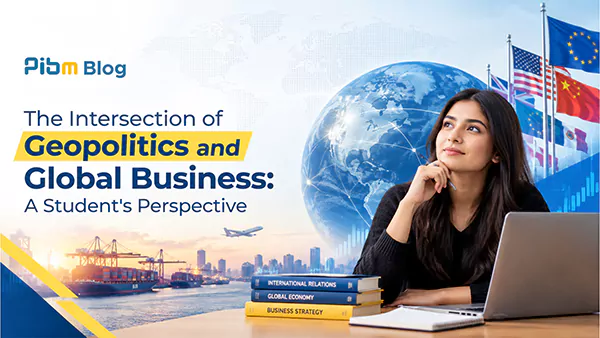
Table of Contents
- Introduction
- Understanding Geopolitics in Business
- Global Trade and the Importance of International Relations
- The US-China Trade Rivalry
- The Russia-Ukraine Conflict and Business Challenges
- Supply Chains: The Biggest Geopolitical Concern
- Foreign Direct Investment and Political Stability
- Technology and Geopolitical Competition
- The Economic Cost of Geopolitical Fragmentation
- How Businesses Are Responding
- Conclusion
Introduction
A few years ago, many people believed that business success depended mainly on product quality, marketing, and customer satisfaction. However, recent global events have shown that political decisions and international relations can influence businesses just as much as market demand.
The Russia-Ukraine conflict, growing tensions between the United States and China, and disruptions in global shipping routes have demonstrated how closely politics and business are connected.
This connection is known as Geopolitics. It refers to how geography, political relationships, economic interests, and government policies influence global events. For businesses operating in multiple countries, geopolitical developments can create both opportunities and challenges.
Today, companies cannot focus only on profits and customers. They must also understand trade policies, sanctions, diplomatic relations, and international conflicts. This blog explores the relationship between Geopolitics and Global Business and explains why geopolitical awareness has become essential for modern organizations.
Understanding Geopolitics in Business
Geopolitics affects how countries interact with one another through trade, security, and economic cooperation. These interactions directly impact businesses.
For example:
- Governments may impose tariffs on imported goods.
- Countries may restrict technology exports.
- Economic sanctions may prevent companies from operating in certain markets.
- Political conflicts may disrupt transportation and supply chains.
In the modern economy, businesses depend on suppliers, manufacturers, and consumers located across different countries. Therefore, any geopolitical change can significantly affect business operations.
Global Trade and the Importance of International Relations
Globalization has connected economies more than ever before. According to the United Nations Conference on Trade and Development (UNCTAD), Global Trade reached a record value of approximately $33 trillion in 2024, reflecting the growing interdependence of countries and businesses worldwide.
Figure 1: Global Trade Growth
| Year | Global Trade Value (USD Trillion) |
|---|---|
| 2022 | $32.0 Trillion |
| 2023 | $32.0 Trillion |
| 2024 | $33.0 Trillion |
Even though global trade continues to grow, increasing geopolitical tensions create uncertainty. Businesses must continuously monitor political developments to protect their operations.
Image Interpretation & Global Strategic Context
The interconnected nature of the global economy is highlighted by the movement of shipping containers across borders among major economic powers including the United States, China, India, Russia, the United Kingdom, Canada, Brazil, Turkey, Mexico, and the European Union. Businesses today rely heavily on international trade agreements, smooth logistics corridors, and stable diplomatic relations. Tensions between major powers or unexpected disruptions in trade passages can immediately escalate business costs, create delivery bottlenecks, and destabilize worldwide markets.
The US-China Trade Rivalry
One of the most significant examples of geopolitics affecting business is the trade rivalry between the United States and China.
For decades, China served as the world's manufacturing hub due to its strong industrial infrastructure and relatively lower production costs. However, trade disputes between the two countries led to the introduction of tariffs on various products.
Business Impact:
- Increased production costs.
- Higher import and export expenses.
- Supply chain disruptions.
- Relocation of manufacturing facilities.
As a result, many multinational companies have adopted a "China Plus One" strategy. This approach allows companies to continue operating in China while expanding production to countries such as India, Vietnam, and Mexico to reduce risk. This example shows how government decisions can influence global investment and corporate strategy.
The Russia-Ukraine Conflict and Business Challenges
Another major geopolitical event affecting global business is the Russia-Ukraine conflict.
Russia and Ukraine are important suppliers of energy products, agricultural commodities, and raw materials. When the conflict began, global markets experienced significant disruptions.
Key Effects:
- Rising fuel prices.
- Increased transportation costs.
- Higher food prices.
- Supply shortages in several industries.
Many multinational organizations reduced or suspended their operations in Russia because of international sanctions and business risks. The conflict demonstrated how a regional political issue can quickly become a global economic challenge, leading to higher operating costs and heightened corporate uncertainty worldwide.
Supply Chains: The Biggest Geopolitical Concern
Modern businesses depend heavily on Global Supply Chains. Raw materials may come from one country, manufacturing may take place in another, and customers may be located elsewhere. When geopolitical tensions increase, supply chains become vulnerable.
Traditional Supply Chain Model
Raw Materials
↓ Manufacturing
↓ Transportation
↓ Distribution
Customers
Geopolitical Risks & Vulnerabilities
Trade Wars
↓ Tariffs
↓ Political Conflicts
↓ Shipping Delays & Port Closures
Higher Costs & Product Shortages
Supply Chain Risk Checkpoints:
Supplier → Factory → Shipping → Warehouse → Customer
Key disruption triggers: Trade Restrictions | Sanctions | Political Conflict | Port Closures
Foreign Direct Investment and Political Stability
Foreign Direct Investment (FDI) is closely connected to the geopolitical environment because businesses consider political stability, regulatory certainty, and economic conditions before committing capital to another country. Companies make FDI to establish manufacturing facilities, offices, research and development centres, and distribution networks, but investors generally favour markets where policies are stable and regulations remain predictable.
According to UNCTAD's World Investment Report, global FDI flows fell to approximately $1.3 trillion in 2022, with geopolitical tensions and broader economic uncertainty contributing to the decline.
Factors Influencing Foreign Investment
| Factor | Importance Level |
|---|---|
| Political Stability | High |
| Market Size | High |
| Infrastructure | Medium |
| Skilled Workforce | Medium |
| Government Policies | High |
Businesses generally avoid investing in regions affected by political instability because uncertainty increases financial risk.
Technology and Geopolitical Competition
Technology has become a major area of geopolitical competition. Countries are actively competing in strategic technology sectors:
- Artificial Intelligence (AI)
- Semiconductor Manufacturing
- Cybersecurity
- Telecommunications (5G & 6G)
- Renewable Energy Technology
Governments increasingly consider advanced technologies as strategic national assets. As a result, export controls and investment restrictions have become more common. For businesses, this means adapting to changing regulations while maintaining innovation and competitiveness. Companies operating in technology sectors must balance business growth with compliance requirements across different countries.
The Economic Cost of Geopolitical Fragmentation
Many economists believe that increasing geopolitical tensions could slow global economic growth.
Research published by the International Monetary Fund (IMF) suggests that greater economic fragmentation and trade restrictions could reduce long-term global economic output by as much as 7%. The IMF also notes that the number of trade restrictions introduced worldwide has increased significantly in recent years.
How Businesses Are Responding
Companies have started developing proactive strategies to mitigate geopolitical risks:
- Diversification: Businesses operate in multiple countries rather than depending on a single market.
- Alternative Suppliers: Organizations maintain backup suppliers to reduce disruption risk.
- Regional Manufacturing: Many companies now produce products closer to their end customers (nearshoring & friendshoring).
- Risk Management Teams: Large corporations employ experts to monitor geopolitical developments and advise management.
Conclusion
Geopolitics and global business have become closely intertwined, with political decisions, international conflicts, trade agreements, and diplomatic relations increasingly influencing the way companies operate. Developments such as the US-China trade rivalry, Russia-Ukraine conflict, and growing trade restrictions show how geopolitical events can directly impact organizations across the world, creating supply chain disruptions, financial risks, and strategic challenges.
In my view, effective business leadership in the future will require more than understanding markets and customers. Leaders will also need to monitor global political developments, anticipate risks, diversify operations, and remain flexible in uncertain situations. Geopolitics is no longer limited to governments or international institutions - it has become a critical component of modern business strategy and decision-making, shaping how organizations plan, compete, and grow in the global marketplace.


Related Articles